U.S. forces finished a five-hour strike mission in Iran, and CENTCOM says the goal was to weaken attacks on commercial shipping.
Story Snapshot
- CENTCOM said the strikes hit about 90 Iranian military targets across several locations.
- The military said the mission focused on air defense, radar, missile, drone, and naval assets.
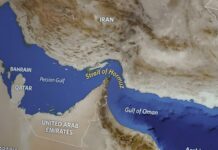
- Officials tied the operation to recent attacks on commercial vessels in the Strait of Hormuz.
- Iran said the strikes hit civilian-linked areas and called the attacks a sovereignty violation.
Mission Focused on Shipping Threats
U.S. Central Command said the latest strikes were a self-defense operation against Iranian military sites. The command said the five-hour mission ended at 10:15 p.m. Eastern Time and hit sites in Bushehr, Chah Bahar, Jask, Konarak, Abu Musa, and Bandar Abbas. CENTCOM said the strikes were meant to reduce Iran’s ability to attack commercial shipping and innocent civilian mariners in the Strait of Hormuz.
The list of targets matters because it shows what the Pentagon says it is trying to stop. CENTCOM described the sites as air defense systems, coastal radar, missile and drone storage, and more than 60 Islamic Revolutionary Guard Corps small boats. That mix points to a campaign built around sea lanes, not a single isolated clash. It also fits a broader pattern of U.S. forces answering attacks on ships with new strikes on coastal military assets.
Evidence, Claims, and Gaps
Publicly released U.S. statements give a clear case for the operation, but they do not settle every dispute. CENTCOM said the strikes followed Iranian attacks on commercial vessels and called those attacks a ceasefire violation. At the same time, the public record does not include the full route data, target files, or intelligence packets that would let outsiders verify each claim on their own. That leaves room for argument over how complete the justification really is.
Independent reporting also raises questions about the results on the ground. The Institute for the Study of War said recent U.S. strikes had no visible effect on Iran’s ability to threaten shipping. Iranian state media and the Health Ministry said 14 people were killed and 78 were injured, including in areas near Bushehr and Konarak. Those reports do not prove every target was civilian, but they do complicate the claim that the mission hit only clean military objects.
Why This Fight Keeps Growing
This episode fits a long and familiar fight over the Strait of Hormuz. The waterway carries a huge share of global oil and trade, so every strike there sends shock waves far beyond the Gulf. U.S. officials say they are protecting shipping lanes. Iranian officials say Washington is violating sovereignty and widening the war. Both sides use the same narrow strip of water to make a larger point about power, deterrence, and control.
US Uses One-way Attack Sea Drones Against Iran for First Time, CENTCOM Says | ANNA AHRONHEIM, The Jerusalem Post
The US military used several Corsair sea drones during operations against Iran, United States Central Command announced. It was the first time that such unmanned… pic.twitter.com/0DxNpaQ4fw
— Owen Gregorian (@OwenGregorian) July 14, 2026
That larger pattern helps explain why each new round of strikes quickly becomes a political fight, not just a military one. Supporters of the U.S. action will point to damaged radar sites, missile stores, and small boats as proof of a defensive mission. Critics will point to civilian casualty claims, missing independent verification, and the absence of neutral confirmation about the shipping incidents. In practice, the public is left to judge competing narratives from governments already locked in conflict.
Sources:
facebook.com, reuters.com, iranintl.com, understandingwar.org, thehindu.com, lemonde.fr, ndtvprofit.com, aljazeera.com