
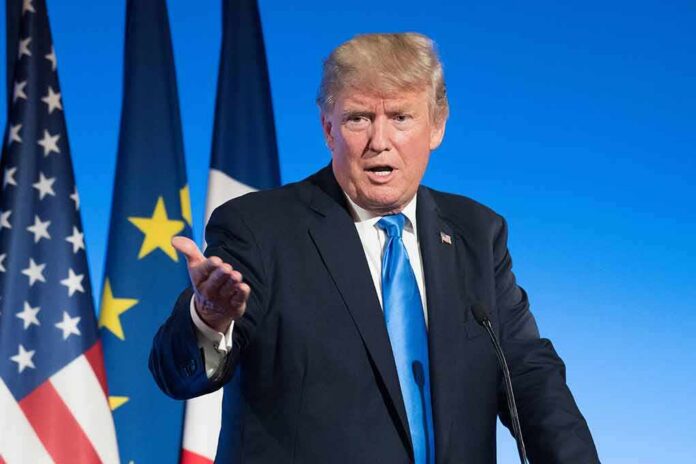
Claims that Donald Trump views Britain as weak and Europe as pathetic are spreading fast online, but the best available reporting points to a deeper, grievance-driven rift rather than simple contempt.
Story Snapshot
- A new analysis says Trump’s Europe stance stems from feeling let down, not indifference.
- No primary-source quote shows Trump calling Britain “weak” or Europe “pathetic” in those words.
- The debate over his intent reflects wider U.S. partisan splits on foreign policy.
- Online posts amplify harsher claims that outpace documented evidence.
What The Available Reporting Actually Establishes
The Dispatch argues that Donald Trump and Senator J.D. Vance care about Europe, but feel Europe betrayed their goodwill. The piece states their stance comes from a sense of broken trust, not disinterest or blanket loathing. The article does not provide quotes of Trump using the words “weak” or “pathetic” for Britain or Europe. Based on this source alone, the sharper language now circulating online goes beyond what the reporting proves. That gap matters for readers trying to sort fact from spin.
The claim about “utter contempt” gained traction on social media, where short clips and hot takes often outpace careful sourcing. The current record from the provided research shows only one cited analysis that frames Trump’s attitude as grievance-based. It does not verify the exact insults now trending. Social media can move faster than evidence, so tying strong labels to a leader’s views should rest on transcripts, video, or documented notes, none of which appear in the available package.
Where The Record Is Strong, And Where It Is Thin
The strongest documented point is the interpretive case that Trump’s posture is rooted in disappointment with Europe. That core idea comes from a published analysis that can be read and checked. The record is thin on Britain-specific language that uses “weak,” and on Europe-specific language that uses “pathetic,” because no primary-source quote in the provided material shows those words. When language is this sharp, readers should expect a verifiable citation, not just summaries.
Past coverage shows that foreign policy debates now sit inside a wider partisan divide in the United States. Research finds Democrats and Republicans are farther apart on international issues than before. This divide shapes how leaders talk about allies and how media and audiences hear those words. In that setting, a tough bargaining stance can be heard as contempt by some, and as realism by others. That split helps explain why the same comments can fuel very different headlines.
Why This Matters For Voters Across The Spectrum
Americans on the right and left worry that elites shape the story while facts lag behind. When claims outrun evidence, it feeds distrust in both media and government. People want straight answers: What did the president say, and where is the proof? A clear record helps citizens judge whether tough talk is leverage to push allies to spend more, or a sign of disdain that could weaken long-standing ties. Reliable sourcing is the only way to make that call.
'Utter Contempt': NYT’s Jonathan Swan Claims Trump Sees Britain As Weak and Europe As Pathetic https://t.co/LqtsvRidQY pic.twitter.com/M6dBYs1qzo
— Marlow62 (@Marlow3456) July 22, 2026
If stronger evidence exists, it will likely come from one of four places. First, on-the-record interviews or speeches with exact wording. Second, official readouts or memos from meetings. Third, audio or video from rallies or calls. Fourth, witnesses who were present, named and accountable. Until such materials surface, the best-supported read is that Trump’s Europe stance reflects grievance over perceived slights, not a documented use of the words now going viral.