
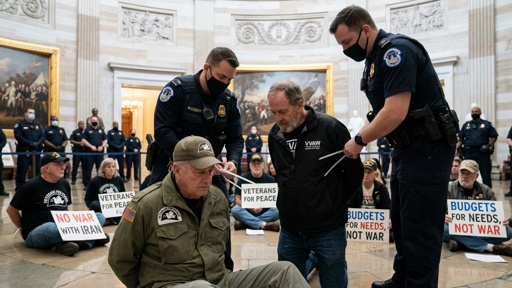
Tennessee’s Republican supermajority convened a special legislative session in May 2026 to redraw congressional districts mid-decade, sparking fierce protests at the state Capitol where thousands of demonstrators flooded galleries and hallways, booing lawmakers as they advanced maps critics say would obliterate the voting power of Black citizens in the state’s lone Democratic district.
The Unprecedented Mid-Decade Power Play
Governor Bill Lee summoned the Tennessee legislature into special session for redistricting barely four years after the last census-mandated maps took effect in 2022. Mid-decade redistricting is rare and typically occurs only when courts order corrections. Republicans hold overwhelming supermajorities in both chambers—75 to 24 in the House and 27 to 6 in the Senate—giving them unilateral power to reshape congressional boundaries. The timing raised immediate red flags among Democrats and civil rights groups, who noted that Tennessee has faced redistricting lawsuits before, with federal courts striking down state Senate maps in 2022 for diluting Black votes in Nashville.
District 9 Becomes Ground Zero
District 9 encompasses Memphis and Shelby County, representing Tennessee’s largest concentration of Black voters. Democrat Steve Cohen has represented the district since 2007, and it has remained in Democratic hands for five decades. Republican leaders see an opportunity to dismantle this Democratic stronghold by carving up Memphis and distributing its voters across multiple Republican-leaning districts. Civil rights advocates argue this strategy deliberately targets Black political power. Representative Justin Jones stated bluntly that the effort signals Black people’s political power is expendable, framing the redistricting as fundamentally about race rather than legitimate policy concerns.
Protesters Flood the Capitol
Demonstrators arrived en masse on the special session’s opening day, filling legislative galleries and spilling into Capitol hallways. Crowds gathered on the east side of the building, chanting slogans about fair representation and future generations. When Republican senators advanced procedural measures to fast-track the redistricting resolution, protesters inside the galleries erupted in boos and expletives. The disruption reflected deep frustration not only with the substance of the redistricting but also with the process itself. Republicans declined to release actual maps publicly on Day 1, leaving even lawmakers uncertain about specific boundary changes. This lack of transparency fueled accusations that GOP leaders aimed to ram through changes before opposition could organize effectively.
Democrats Mobilize Against the Clock
Lacking votes to block the maps, Democratic lawmakers pursued alternative strategies. Senator Jeff Yarbro declared the entire redistricting effort illegal without question, arguing it violates both state and federal law. Representative Jason Powell introduced a resolution to limit mid-decade redistricting, though it had no realistic chance of passage with Republican supermajorities. Democrats organized a public hearing at First Baptist Church Capitol Hill on May 6, branding the redistricting a partisan power grab designed to make Tennessee the most gerrymandered state in America. Senator Heidi Campbell emphasized the stakes, warning that entrenching Republican dominance through manipulated maps would silence minority voices for the rest of the decade.
Supreme Court Ruling Clears the Path
The redistricting effort gained legal viability following a 2024 U.S. Supreme Court decision that relaxed protections for majority-minority districts under the Voting Rights Act. The ruling in Alexander v. South Carolina NAACP State Conference and related cases held that states can alter districts favoring racial minorities unless challengers prove intentional discrimination, a notoriously difficult legal standard to meet. Tennessee Republicans seized on this opening, confident that federal courts would uphold their maps even if challenged. This shift represents a fundamental change in how redistricting disputes play out, emboldening state legislatures to pursue aggressive gerrymanders that previously would have faced immediate legal obstacles.
Tennessee Capitol erupts in chaos as thousands protest new state maps… https://t.co/eOx2lAo7Hv
— SATANYAHU (@Outli3rThe) May 7, 2026
The protests evoke memories of the 2023 Capitol unrest when thousands rallied for gun reform after a Nashville school shooting. That episode resulted in the expulsion of Representatives Justin Jones and Justin Pearson, both Democrats, for participating in demonstrations on the House floor. Their reinstatement galvanized progressive activists and contributed to the mobilization visible during the 2026 redistricting session. The parallels are striking: large crowds, intense emotions, and fundamental disagreements about representation and democratic fairness. Whether the current protests will alter the outcome remains doubtful. Republicans have the numbers, the procedural control, and a Supreme Court precedent supporting their authority. Legal challenges will almost certainly follow passage, but litigation takes time, and new maps could reshape Tennessee’s congressional delegation for years before courts intervene.
Sources:
Tennessee Republicans file new congressional map proposal as Capitol protests continue
Rule changes, protests and no maps: What happened on Day 1 of Tennessee’s special session
Public hearing before vote: TN Democrats speak out against redistricted state map