A federal officer is dead, a suspect is wounded and in custody, and the government is asking the public to trust a story built almost entirely on its own tightly controlled statements.
Story Snapshot
- A Deputy U.S. Marshal was shot and killed while serving an arrest warrant on a fugitive in Alexandria, Louisiana, and the suspect is now in custody.
- Federal officials say the suspect fired on officers almost immediately, triggering a standoff and leading the Federal Bureau of Investigation (FBI) to label the case an “assault on a federal officer.”
- Authorities have not released the names of the marshal or the suspect, or the warrant details, leaving major questions about what led to the deadly confrontation.
- This killing fits a broader pattern where United States Marshals Service fugitive task forces operate with high risk and limited public accountability, feeding frustration on both the left and right.
Deadly Warrant Attempt in a Louisiana Neighborhood
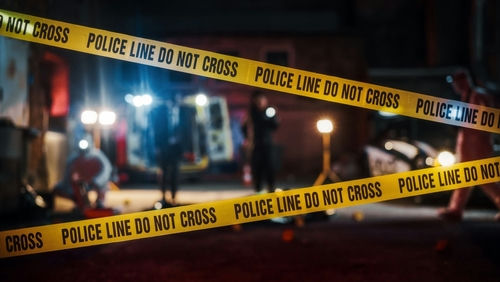
Federal officials say the shooting happened around 3 p.m. at a home on Rutland Road in Alexandria, near the intersection with Moor Road. Members of the United States Marshals Service Violent Offender Task Force, working with Rapides Parish Sheriff’s Office detectives, Louisiana State Police, and Alexandria Police, were there to arrest a “wanted fugitive.” Within seconds of officers arriving, gunfire erupted, and a Deputy U.S. Marshal was fatally shot, according to official statements and local witness accounts.
The United States Marshals Service confirmed that the deputy died from gunshot wounds sustained while serving the arrest warrant. Federal authorities state that the suspect shot and killed the marshal during the attempt to serve that warrant, turning a planned arrest into a deadly exchange. After the initial gunfire, officials say the suspect engaged local, state, and federal officers in a standoff, during which the suspect was injured. The suspect was eventually taken into custody and transported to a local hospital for treatment.
Investigation Led by Federal Agencies, With Few Public Details
The Federal Bureau of Investigation’s New Orleans Field Office is leading the investigation into the marshal’s death, calling the case an “assault on a federal officer.” Rapides Parish Sheriff’s Office and Louisiana State Police are also investigating what they describe as an officer-involved shooting during a fugitive operation. Officials say the case is “active and ongoing” and have declined to give more detail about what happened inside and around the home before, during, and after the gunfire.
Reports differ on how long the standoff lasted, which adds to public confusion. Rapides Parish Sheriff’s Office referred to a “lengthy standoff,” while one report from local television described the standoff as lasting about three hours. That kind of inconsistency is small on its own, but it matters to citizens who already question whether they are getting the full story from federal and local agencies. Many Americans across the political spectrum are tired of seeing government act first and explain later, often with missing pieces.
Names Withheld, Warrants Sealed, Public Trust Strained
Authorities have not released the identity of the slain Deputy U.S. Marshal. They have also withheld the suspect’s name and any information about the charges behind the arrest warrant, including whether the fugitive was accused of violent crimes or nonviolent offenses. Without these basic facts, the public cannot check court records, review prior cases, or judge whether the level of force used and the risk taken in a residential area matched the threat.
No body camera footage or officer-worn video from the scene has been made public. No ballistic reports have been released to show shot direction, number of rounds fired, or which weapons were used. The entire narrative so far rests on agency statements and a few brief witness comments. For many Americans, both conservative and liberal, this is a familiar pattern: government demands trust while holding back key information that would allow citizens to verify the story themselves.
Pattern of Violent Marshal Operations and Limited Accountability
This killing is not an isolated case. The United States Marshals Service’s own roll call of honor shows a long history of marshals and deputies killed while serving warrants or trying to arrest suspects, going back to the 1700s. In recent years, reporting has shown that marshals and their fugitive task forces operate much like local police but with more autonomy and fewer clear accountability rules when shootings occur. Between 2015 and 2020, at least five marshals or task force members were killed while trying to make arrests.
🔴 U.S. Marshal killed serving arrest warrant in Louisiana; suspect in custody
A deputy U.S. Marshal was shot and killed Monday while serving an arrest warrant on a fugitive in Alexandria, Louisiana, approximately 95 miles northwest of Baton Rouge. The shooting occurred at about… pic.twitter.com/d9oPaE2wt0
— NewsTongue (@NewsTongueX) July 14, 2026
Investigations have also found that task forces involving the United States Marshals Service are linked to many shootings of civilians, often with little public detail and few consequences for officers when questions arise. This mix of high-risk operations, limited transparency, and a protective shield from the Department of Justice feeds a growing belief that a “deep state” of insiders plays by its own rules. For citizens on the right, that feels like unaccountable power; for citizens on the left, it looks like unchecked force against poorer communities and minorities.
Shared Concerns About Power, Safety, and the American Dream
Conservatives who worry about crime and respect for law also see a government that sends officers into dangerous situations without seeming to learn from past failures or openly explain what went wrong. Liberals who worry about excessive force and inequality see another fatal raid in a neighborhood, with the government telling people to accept the official version while hiding key facts. Both sides, in different ways, see a federal system that fails to balance safety, liberty, and truth.
What comes next matters. Full release of the marshal’s identity, the suspect’s name, the arrest warrant, body camera footage, and forensic reports would let the public judge the case on facts, not rumor or spin. Without that openness, this tragedy risks becoming one more entry in a long list of deadly encounters where the government’s story is the only one the public is allowed to hear. In a time when many Americans no longer trust the “elites” running federal agencies, that is a dangerous path.
Sources:
thegatewaypundit.com, abcnews.com, cbsnews.com, audacy.com, odmp.org, latimes.com, usmarshals.gov