
A “hazardous device incident” at a Cleveland-area immigration office shows how fast one suspicious package can shut down part of the federal government—and how little the public learns afterward.
Story Snapshot
- A law enforcement dog flagged a package at a Cleveland-area immigration office, triggering full evacuation and bomb-style response.
- Federal officials say the package contained a live explosive device, but have released few details about who sent it or why.
- The scare fits a rising pattern of threats and hoaxes targeting federal buildings, especially immigration enforcement sites.
- The incident fuels left–right frustration with secretive, reactive government that seems better at locking down than solving deeper problems.
What Happened At The Cleveland-Area Immigration Office
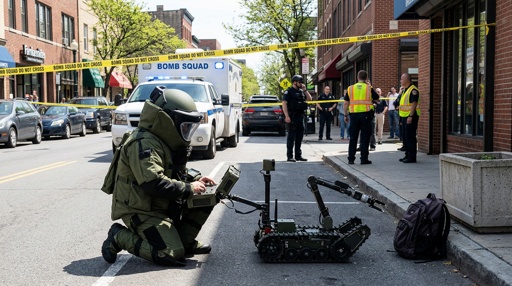
Federal officials said a routine security sweep at a U.S. Immigration and Customs Enforcement office building in Brooklyn Heights, just outside Cleveland, turned serious when a trained dog alerted to a package in a private shipping drop box in the lobby.[1] Officers with the Federal Protective Service, which guards federal buildings, immediately called local police and ordered everyone out of the facility as a safety step.[1] Nearby offices were also cleared while roads around the complex were blocked and a bomb squad moved in.[2]
The Department of Homeland Security later told reporters that investigators found a suspicious package “near a Homeland Security office” that held what they described as a live explosive device.[1][2] The Bureau of Alcohol, Tobacco, Firearms and Explosives labeled the event a “hazardous device incident,” a term normally used when bomb technicians treat an item as potentially able to explode.[1] At least seven buildings in the complex were evacuated, but no injuries were reported and workers were allowed to return after officials declared the scene safe.[1][2]
How Authorities Respond To Suspicious Packages
Federal rules instruct officers to treat any “suspicious package” as dangerous until experts prove otherwise. Those procedures say that if a package seems like it could contain explosives, responders must evacuate the area, keep people about five hundred feet away, and call local fire, police, hazardous-material crews, and bomb technicians. Guidance used at universities and other sites gives similar advice: do not touch the package, isolate the area, call security, and clear people out while teams assess the risk.
National data on federal buildings show that threats like this are not rare. A congressional review found that out of sixty-seven serious threats or incidents at federal facilities over a period of years, twenty-four—about one in three—involved evacuations for bomb threats or suspicious packages. Many of those events ended with no confirmed bomb, but officials still followed the same full-scale playbook to avoid a deadly mistake. That helps explain why the Cleveland-area building and its neighbors were emptied even before anyone could confirm what was inside the parcel.[1]
Why Immigration Offices Have Become A Target
This scare also fits a wider trend: repeated attempts to threaten or disrupt immigration enforcement sites. In a recent case in Texas, a Homeland Security Investigations office of U.S. Immigration and Customs Enforcement in the San Antonio area had to evacuate after staff received an envelope with suspicious white powder. The agency described that mailing as a “blatant attempt to disrupt ICE operations and endanger its personnel” and called in the Federal Bureau of Investigation to test the substance. No injuries were reported, but the office lost time and had to halt work while the threat was checked.
Seen together, these incidents show how cheap threats—whether real bombs, fake devices, or mystery powders—can rattle federal offices that handle some of the country’s most divisive issues.[1][2] For conservatives who support strict border controls, attacks on immigration offices look like efforts to intimidate law enforcement and stop the government from enforcing the law. For many liberals who oppose current immigration policies, the same events raise fears that growing anger on all sides is boiling over into dangerous acts. Both sides watch the news and see a government that seems stuck responding to emergencies instead of fixing the system that keeps producing them.
Secrecy, Public Trust, And The “Deep State” Feeling
So far, officials have shared almost no detail about who sent the Cleveland-area package, what kind of explosive was involved, or whether anyone has been arrested.[1][2][3] Agencies often stay quiet during active investigations, but that silence feeds a wider belief that the government hides the ball unless it suits those in power. Many Americans—right and left—already see Washington, D.C. as run by well-connected insiders who protect their own while everyday people get little clarity and even less accountability.
BREAKING: A live explosive device was found near a Cleveland-area DHS/ICE office. Seven buildings evacuated. FBI and ATF investigating.
After NJ, Minnesota, and Portland Dems spent weeks framing ICE as illegitimate and dangerous, this barely registers.
You can trace the…
— Will Ricciardella (@WillRicci) June 15, 2026
Events like this hit several raw nerves at once. People see federal workers rushed out of buildings and bomb squads rolling in, yet basic problems in their own lives—high prices, weak wages, crime, border chaos—seem to grind on without real solutions. Some fear that constant “security incidents” at federal sites will be used to justify more surveillance, bigger security budgets, and tighter controls on the public, instead of addressing the policies that fuel rage toward these facilities in the first place. In that sense, one box in a lobby becomes another symbol of a nervous, heavily guarded government that still feels distant from the citizens it is supposed to serve.
Sources:
[1] Web – Report: ‘Hazardous Device Incident’ Prompts Evacuations at …
[2] Web – Live explosive device found near Homeland Security office in …
[3] Web – Live explosive device found near ICE office in Cleveland area complex