
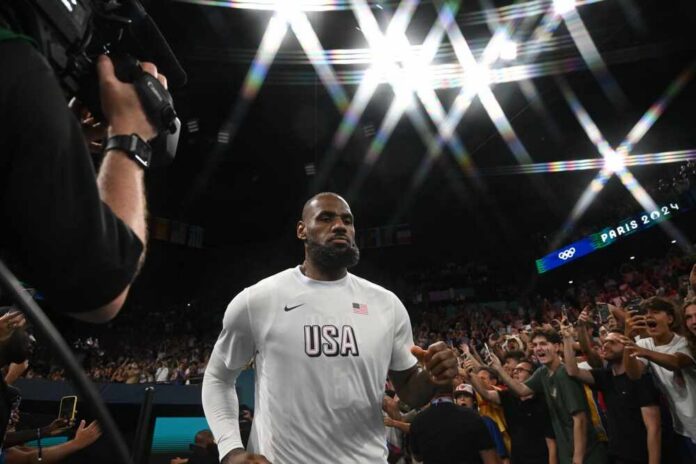
LeBron James just told the Los Angeles Lakers he is gone, and his slow-motion exit now shows how superstar power can bend the entire NBA around one man’s timeline.
Story Snapshot
- LeBron James has formally informed the Los Angeles Lakers he will play for a different team in the 2026-27 season.
- At 41, he is still productive and wants “meaningful, competitive basketball,” not just a paycheck, as he enters his 24th NBA season.
- His agent Rich Paul says he has spoken with 27 teams, including the Golden State Warriors, Cleveland Cavaliers, and Miami Heat, yet no destination is public.
- The delay feeds fan frustration and league uncertainty, echoing broader anger about elites playing by their own rules while regular people are expected to “trust the process.”
LeBron walks away and takes control of the end of his career
LeBron James has told the Los Angeles Lakers that his eight-year run with the team is over and that he will play his record 24th season somewhere else. This is not rumor; his longtime agent Rich Paul relayed the decision directly to Lakers leadership and to major outlets like ESPN. The move follows a season where James, now 41, still averaged over 20 points with strong assists and rebounds, proving he can still help a team win games. He is choosing his next chapter on his own terms.
Rich Paul said he has talked with 27 teams about LeBron, including the Cleveland Cavaliers, Golden State Warriors, and Miami Heat. Other reporting points to the Golden State Warriors “at the front of the line” in pursuit, with betting markets listing them as favorites and the Cavaliers, Heat, and even San Antonio as long-shot options. League insiders say James will hear pitches from several franchises before deciding, turning his free agency into an extended audition where teams must prove they are ready to contend now.
Free agency drama and a league waiting on one decision
For now, no one outside LeBron’s inner circle knows his final choice, and he has stayed silent in public appearances. Writers at The Athletic and other outlets say he has given “no hints” about which team he favors, even while talking about his Lakers years. This silence builds pressure. Teams cannot fully lock in their rosters, and fans of places like Cleveland, Miami, and the Bay Area are stuck in limbo, refreshing their phones for news that never quite lands. The league’s biggest story is an unanswered question.
James has made clear his main goal is to play “meaningful, competitive basketball” at his next stop, not chase one last giant payday. Reports describe happiness, family comfort, and a real chance to win as key factors shaping his choice. That means mid-level teams hoping for a quick marketing boost are unlikely to win the sweepstakes. Instead, franchises with strong cores—like Golden State, Cleveland, or Miami—can pitch him on fitting into a system that already works. He wants pressure games in May and June, not empty stats on a lottery team.
Star-player power, fan frustration, and the “elite rules” problem
LeBron’s slow, careful process fits a broader trend across professional sports: top stars using free agency delays to gain maximum leverage over teams and leagues. Since 2010, when James staged his first “Decision” special, elite players have learned that waiting, hinting, and keeping options open can force franchises to bend schedules, salary plans, and even coaching hires around them. Analysts now talk openly about how player power has grown while team control has shrunk, especially when a global icon is involved.
Many everyday fans see this and feel a familiar anger. In politics, business, and sports, it often looks like the rules are different for elites. League officials build national-TV schedules around one man’s choice, while ordinary workers are told to be flexible and grateful. Conservatives tired of celebrity culture and liberals worried about growing gaps between the powerful and everyone else can both look at this saga and see the same pattern: insiders set the timelines, and the rest of us just wait.
Media spin, mixed signals, and why trust is eroding
Big outlets do not fully agree on where LeBron will land. Some earlier coverage framed the Lakers as a likely future home, which now clashes with clear reports that he is leaving. New stories push the Warriors as favorites, while other analysts argue for a sentimental return to Cleveland or a final chapter in Miami’s heat and humidity. This constant shift of “front-runners” without hard facts feeds skepticism. Fans are left wondering how much is real insight and how much is content-driven hype.
The wait is almost over. LeBron James and Rich Paul are reportedly finalizing a decision that could be announced as early as the next few days. With the 76ers, Cavaliers, Warriors, Heat, and Timberwolves all in the mix, the NBA’s biggest free-agency saga is finally reaching its…
— Adésọjí (@sam4se) July 18, 2026
That skepticism ties back to a larger loss of confidence many Americans feel toward major institutions. People watch sports networks, political news, and financial shows and see one common theme: drama sells. LeBron’s drawn-out decision is great business for television and online traffic, even if it leaves audiences confused and annoyed. In a country where many believe government, media, and big business care more about clicks and reelection than honest problem-solving, this free agency circus feels like one more reminder that the “big players” rarely move on our timeline.
Sources:
espn.com, nba.com, usatoday.com, nytimes.com, cnn.com