New York’s new tax on luxury second homes, sold as “fair share” for child care and safe streets, has instead lit up anger and deep distrust about how far government will go to squeeze taxpayers next.
Story Snapshot
- New York approved a new pied-à-terre tax on non‑primary homes starting at $1 million, pitched as a way to fund childcare, cleaner streets, and safer neighborhoods.
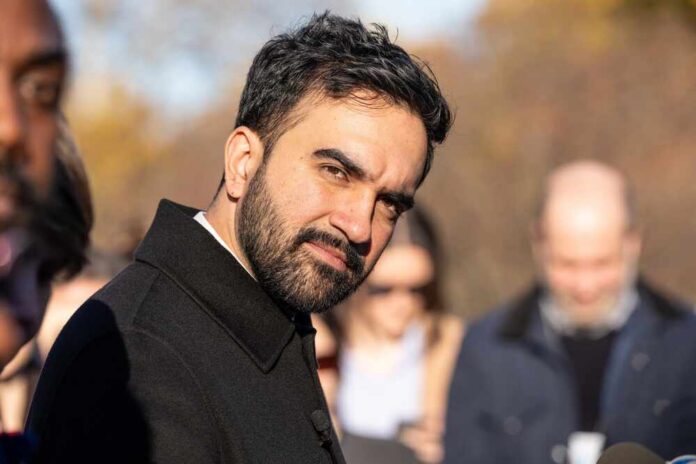
- Mayor Zohran Mamdani showcased the tax in a high‑profile “tax the rich” video, warning wealthy owners to pay their “fair share,” which sparked online backlash and charges of Marxism and hypocrisy.
- Supporters say the levy targets absentee billionaires who treat New York housing as a wealth storage locker, while many residents fear it is a first step toward broader tax hikes and more middle‑class pain.
- Fiscal watchdogs and business groups warn the tax may raise far less than the promised $500 million and could speed the exodus of wealth and investment from the city.
Mamdani’s “fair share” push: what the new tax actually does
Mayor Zohran Mamdani and Governor Kathy Hochul won approval this spring for a new “pied-à-terre tax” aimed at luxury second homes in New York City. The tax applies to non‑primary residences, including condos and townhouses, that are used only part‑time and valued at least $1 million. For the next two tax years, second homes between $1 million and $3 million will face a 4% annual surcharge, with higher brackets stepping up to 6.5% on properties above $5 million. After property values are updated, rates are set to drop, but high‑end owners would still pay close to 1% extra each year. Mamdani’s office and the governor say the tax should bring in about $500 million annually for the city budget.
Mamdani has framed the policy as a simple matter of fairness. Standing outside a Central Park luxury tower where billionaire Ken Griffin owns a record‑setting penthouse, he declared that the tax is “specifically designed for the richest of the rich” who park wealth in New York real estate but do not live in the city or share its daily struggles. In public remarks and city press materials, he has linked the expected revenue to free childcare programs, cleaner streets, and safer neighborhoods, tying the levy directly to visible services that many working families say they lack today. To his supporters, this is a long‑promised move to finally make absentee billionaires help pay to keep the city livable.
Online firestorm: fairness for some, fear for many
That “fair share” message exploded online once Mamdani’s video and press statements hit social media. Critics on X accused the mayor of class warfare and branded him a “full blown communist,” saying his language sounded less like basic tax policy and more like an attack on success itself. Some posts highlighted that Mamdani had enjoyed subsidized university housing earlier in his career, calling him hypocritical for now scolding other people’s wealth while benefiting from taxpayer support. Others warned that if the city can slap a big new bill on one group it does not like today, it can find reasons to target other groups tomorrow, feeding a wider sense that government power is being used more to pick winners and losers than to solve problems.
For many conservative and liberal New Yorkers alike, the uproar over the pied‑à‑terre tax taps into a deeper frustration. Long‑time conservatives see another sign of “tax the rich” politics that they believe drive investment out of the city while failing to fix crime, schools, or affordability. Progressives who once cheered Mamdani’s promises now worry after watching his earlier threat to raise general property taxes nearly 10% when he could not get his full millionaire tax through Albany. They fear that when projected revenues fall short or spending keeps rising, leaders will come back for broader tax hikes on everyday homeowners and small landlords, not just billionaires.
Will the tax work — and who pays the real price?
Behind the heated rhetoric sits a practical question: can this kind of narrow “tax the rich” measure really deliver what Mamdani promises? City budget writers and outside analysts note that New York faces a multi‑billion‑dollar shortfall driven by long‑term pension costs, rising social program spending, and slower post‑pandemic growth. In that context, $500 million a year sounds large but covers only a slice of the gap. A study cited by the city comptroller suggests the tax may raise closer to $300 million and could even reduce other tax revenues if wealthy owners sell, leave, or restructure their holdings. That same analysis warns the city might lose tens of millions yearly from fewer high‑end deals and less income tax from people who would otherwise spend more time in New York.
Business groups and real estate experts add another layer of concern: legal and valuation fights. Because the tax depends on how the city Department of Finance values units and proves they are second homes, they expect a wave of lawsuits from building owners and rich residents challenging assessments and classifications. Those cases could drag on for years, delaying collections and eating into the promised revenue through legal and administrative costs. If luxury buyers begin to see New York as a place where rules change fast and where elected leaders single them out in videos, they may choose other cities or states, deepening the feeling among many residents that political theater is being put ahead of long‑term growth.
Fairness, frustration, and a bigger trust problem
Supporters of the pied‑à‑terre tax argue that absentee billionaires are not going to flee over what they see as a modest surcharge on ultra‑expensive “investment apartments.” They say New York has tried cutting deals for the rich for years and still ended up with sky‑high rent, strained transit, and overstretched schools, so it is reasonable to test whether tapping luxury property can help ease the load on working families. Opponents counter that every “modest” tax has a way of growing over time and spreading to more people once politicians become dependent on the revenue. On that view, the pied‑à‑terre tax is less a final fix than another warning that the political class will keep reaching for new ways to spend more while telling taxpayers to simply “pay their fair share,” no matter how much they already give.
New York City Democrat Mayor Zohran Mamdani announced that anyone who owns a second house in NYC will soon have to pay more in taxes. Glenn calls out Mamdani’s radical tax plan, arguing it will shrink the housing supply, reduce city revenue, and … https://t.co/Q0jk6YijRi pic.twitter.com/bOsm7SzRvH
— NewsRadio WKCY – 107.9 FM (@newsradiowkcy) July 25, 2026
For many Americans watching from outside New York, the fight over this single tax feels like a small window into a larger problem. On one side, a city government points to real needs — child care, public safety, housing costs — and claims it can cover them by targeting a tiny slice of very rich owners. On the other side, people across the political spectrum see leaders who seem quicker to stage videos in front of billionaires’ buildings than to reform waste, tackle crime, or cut bloated programs. The clash over Mamdani’s pied‑à‑terre tax will not settle that wider debate, but it does show how far trust in government has fallen when even a tax aimed at 13,000 luxury apartments can make millions of ordinary citizens feel like they are next in line.
Sources:
thegatewaypundit.com, nytimes.com, nypost.com, theguardian.com, foxnews.com, cnn.com, forbes.com, wsj.com, cato.org, usatoday.com, nyc.gov, cnbc.com, reuters.com