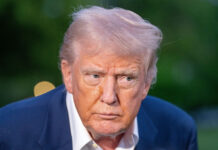
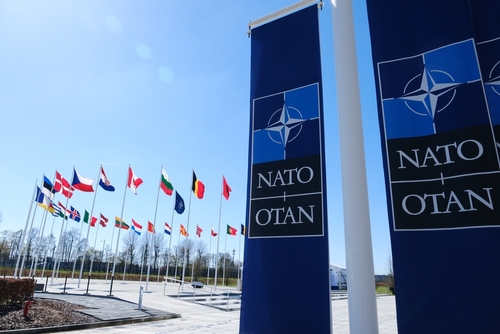
At the NATO summit in Ankara, President Donald Trump sharply criticized NATO allies over defense spending and burden-sharing, renewing longstanding disputes over the alliance’s future and members’ military commitments.
Story Snapshot
- Trump says the U.S. pays “ridiculous” sums for NATO and gets too little in return.
- He is now openly talking about cutting America’s role in the alliance.
- NATO’s chief, Mark Rutte, argues Europe has already boosted defense and helps U.S. jobs.
- The disagreement unfolded alongside broader tensions over Middle East security and allied military commitments.
Trump’s grievance: money, loyalty, and a ‘ridiculous’ burden
Five days before NATO leaders met in Ankara, President Donald Trump blasted the alliance on social media, claiming the United States spends “more money on NATO than any other country, by far, to protect them, without getting any benefit from so doing,” and calling the burden “ridiculous.” He listed U.S. defense costs near $999 billion versus much smaller figures for Britain, France, Italy, and Poland, casting Europe as underpaying while America shoulders the load alone.
At the summit itself, Trump carried that anger into the room, telling reporters the U.S. spends “hundreds of billions” and hinting he may reduce America’s partnership if allies do not do more. He did not only complain about money. In joint events with NATO Secretary General Mark Rutte, Trump suggested some allies had not shown sufficient support for recent U.S. military actions. That mix of cost and loyalty hits a nerve for many Americans who feel Washington pays big bills while foreign elites reap the benefits.
Rutte’s pushback: NATO 3.0 and Europe’s case
NATO Secretary General Mark Rutte tried to answer Trump’s anger with numbers and a different story. In briefings and public comments, he showed charts claiming European allies and Canada have raised defense spending by over a trillion dollars since Trump first took office, and that much of that money went into U.S.-made weapons, creating tens of thousands of American jobs. In other interviews, Rutte even called the new 5% of economic output defense goal Trump’s “greatest foreign policy achievement” and said NATO is “more robust than it has ever been.”
Rutte argued that increased European defense spending demonstrates the alliance has responded to U.S. pressure. He argues this proves the alliance is not freeloading but responding to U.S. pressure. For many Europeans, the problem looks flipped. They see Trump’s talk of cutting support and questioning mutual defense as the real threat, fearing he could walk away from a promise that has kept the peace in Europe for decades. That clash between Trump’s math and Rutte’s charts captures a wider divide over whether NATO is a bad deal or a bargain for the U.S.
Iran, the Strait of Hormuz, and why allies stayed back
The money fight is tangled up with a very real shooting war. As U.S. forces hit Iran and tankers came under attack near the Strait of Hormuz, Trump wanted NATO states to join tougher moves to keep the sea lane open. Several key allies refused to back a U.S.-led blockade idea and instead pushed for talks to reopen the strait after the fighting stops, putting diplomacy first. Leaders in Britain, France, Germany, and Spain argued the conflict was “not our war” and said deeper military action could drag their countries into direct confrontation with Iran.
NATO planners, meanwhile, worked on what they called a “defensive plan” to secure the Strait of Hormuz once the war cools down, but they did not give Trump the fast, aggressive help he wanted. Many European governments worry Iran could target their troops, ships, or cities if they are seen as front-line actors in a U.S.-Iran clash. For Trump and many Americans, this looks like allies hiding when things get dangerous. For many Europeans, it looks like refusing to be pulled into yet another Middle East war they did not start. That difference feeds the sense, on both sides of the Atlantic, that leaders care more about avoiding risk than about backing partners.
Deeper pattern: burden-sharing and a failing political class
The Ankara showdown is part of a longer pattern. For years, Trump has used NATO burden-sharing as a pressure tool, railing against the old 2% of economic output defense target and sometimes demanding 4% or even 5%. Academic studies and policy reports show European defense spending did rise after his first term, but they also note that U.S. forces in Europe and core treaty promises mostly stayed the same. In other words, the harsh talk shifted budgets without fully changing the basic shape of the alliance.
Netanyahu Warned Trump on Turkey
Israeli Prime Minister Benjamin Netanyahu used back-to-back interviews ahead of the NATO summit in Ankara to caution against a Trump-brokered F-35 deal for Turkey, citing Ankara's occupation of half of Cyprus and threats against Greece, another… pic.twitter.com/Iwca6hwdU7
— Greek Report 🇬🇷 (@GreekReporterr) July 7, 2026
The summit underscored continuing disagreements over burden-sharing, alliance priorities, and how NATO members should balance collective defense with domestic fiscal pressures. Those debates are likely to continue well beyond the Ankara meeting.
Sources:
insiderpaper.com, justsecurity.org, instagram.com, facebook.com, apnews.com, youtube.com, nbcnews.com, npr.org, aa.com.tr, time.com, diis.dk, defensepriorities.org, tandfonline.com, taxpayer.net, jstor.org