A powerful 7.3 earthquake off Mexico’s southern coast shook three countries, triggered a tsunami alert, and reminded millions how quickly nature can overwhelm fragile government systems.
Story Snapshot
- A 7.3-magnitude quake hit off Chiapas near the Guatemala border, felt from Mexico City to El Salvador.
- U.S. officials issued a tsunami threat alert for Pacific coasts of Mexico and Central America.
- Early reports showed no major damage or deaths, but landslides and some injuries were reported.
- The quake exposed how coastal communities depend on fast, honest alerts from often distrusted governments.
Strong quake strikes a vulnerable border region
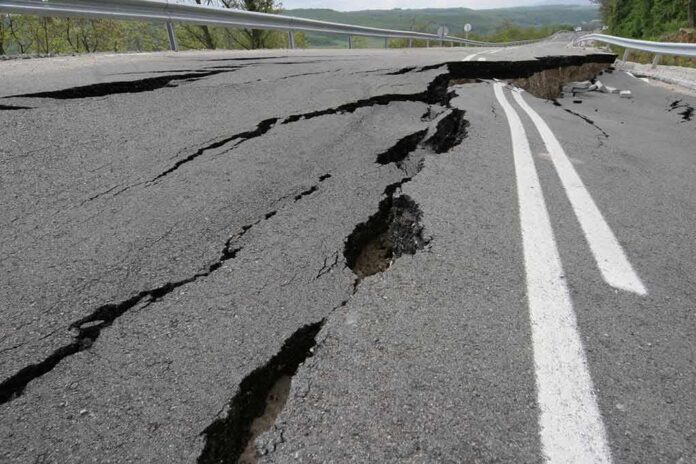
A magnitude 7.3 earthquake struck Friday morning off the Pacific coast of Chiapas, near Mexico’s border with Guatemala, shaking cities and towns across southern Mexico and Central America. The United States Geological Survey said the epicenter was about 30 miles southwest of Huixtla, in ocean waters off Chiapas, at a shallow depth of roughly 9 to 15 miles. Tremors were felt as far away as Mexico City and into Guatemala and El Salvador as people rushed out of homes, offices, and schools.
Authorities in Mexico and Guatemala reported no immediate large-scale damage or deaths, though emergency crews were still checking remote areas. Regional news and local officials described buildings swaying, windows rattling, and panicked crowds gathering in public squares as aftershocks followed. Guatemala’s disaster agency said early surveys found limited structural harm but shared video showing landslides blocking roads in western highland regions, adding to fears of hidden damage in poorer rural communities.
Tsunami alerts and coastal evacuations
Minutes after the quake, the United States Tsunami Warning Center issued a tsunami threat alert for parts of the Pacific coasts of Mexico and Central America. Mexico’s navy urged residents and tourists to stay off beaches for several hours, while local meteorologists in Chiapas warned that waves up to about three feet could reach nearby shores in Mexico and Guatemala. The warning stretched roughly 300 kilometers from the epicenter, covering fishing towns and small ports that depend on the sea but often lack strong sea walls or modern infrastructure.
Reports from the region indicated that some coastal areas saw modest water level changes and strong currents, but no destructive, towering waves. Officials later downgraded the alert as measurements showed limited tsunami energy, yet many evacuations had already taken place in Guatemala City and other coastal zones as a precaution. For residents who remember deadly tsunamis and past major quakes, the fast alerts were welcome, even as many wondered whether governments would have been as quick if tourism profits, rather than public safety, were on the line.
Aftershocks, past disasters, and trust in institutions
Seismologists recorded dozens of aftershocks, including several with magnitudes above 5.0, keeping nerves on edge across the region. People in Chiapas and nearby states compared Friday’s quake to the 2017 Chiapas earthquake, a magnitude 8.1–8.2 event that killed nearly one hundred people and sent tsunami waves over five feet high into coastal towns. For older residents, this latest quake felt like another warning that they live in a high-risk zone where the ground, the ocean, and sometimes the government all seem unstable at once.
NEWS UPDATE: Authorities reported no major damage or fatalities after a powerful magnitude 7.3 earthquake struck off the coast of Chiapas in southern Mexico.
The quake triggered a tsunami warning and prompted evacuations across parts of Mexico, Guatemala, and El Salvador. The… pic.twitter.com/4nSPFPWmxb
— Daily Tribune (@tribunephl) July 18, 2026
Mexican President Claudia Sheinbaum said early assessments showed “no serious effects,” while naval and civil protection officials stressed that emergency plans worked and communication was rapid. Still, many citizens across the political spectrum — in Mexico, Guatemala, and the United States watching from afar — see events like this as tests the government barely passes. Rural roads remain weak, hospitals are stretched, and real-time alert systems rely on funding decisions shaped by elites more focused on elections than on the needs of border communities that rarely make headlines.
Shared worries about disaster readiness
For conservative and liberal observers alike, this quake highlights a common fear: when disaster hits, ordinary people must depend on institutions they do not fully trust. Older conservatives see fragile energy grids, thin border security, and slow infrastructure repairs as proof that globalist priorities and years of wasteful spending have left communities exposed. Many older liberals look at the same images and see how inequality, cuts to social programs, and profit-first planning leave poorer families with the least protection and the worst housing in shaking zones.
Along the Chiapas–Guatemala coast, those worries are more than political talking points; they are daily reality. Fishermen and farm workers live in simple homes near steep hillsides and open beaches, far from big hospitals and modern shelters. When an earthquake and tsunami alert come, they rely on sirens, radios, and local leaders more than distant ministries. If roads fail or phone networks collapse, outside help can take hours or days. That gap between risk and support feeds the belief, on both left and right, that distant elites talk about “resilience” but do not truly invest in it.
Why this matters beyond Mexico and Guatemala
Friday’s quake did not become a mass-casualty disaster, and that is good news. Yet for many in the United States watching another natural threat unfold near their southern border, the event feels like another reminder that the modern world is more fragile than advertised. Earthquakes do not care about party lines or national slogans. They strike where fault lines run, often in regions already stressed by migration, crime, and economic hardship, and they expose whether governments have built strong systems or just strong speeches.
As the United States debates budgets for emergency management, border policy, and foreign aid, scenes from Chiapas and Guatemala show what is at stake. Reliable science from the United States Geological Survey, honest tsunami alerts, and clear communication are essential. But they must be backed by roads that hold, hospitals that can handle surges, and leaders who treat vulnerable border communities as more than statistics. If the federal government fails that test at home or abroad, nature’s next shock will not just shake buildings — it will further erode public faith in the institutions meant to protect them.
Sources:
insiderpaper.com, latimes.com, usatoday.com, euronews.com, apnews.com, newsweek.com